
Judo technique
Yoko-shiho-gatame
Learn the basics of Yoko-shiho-gatame and how to escape from it.
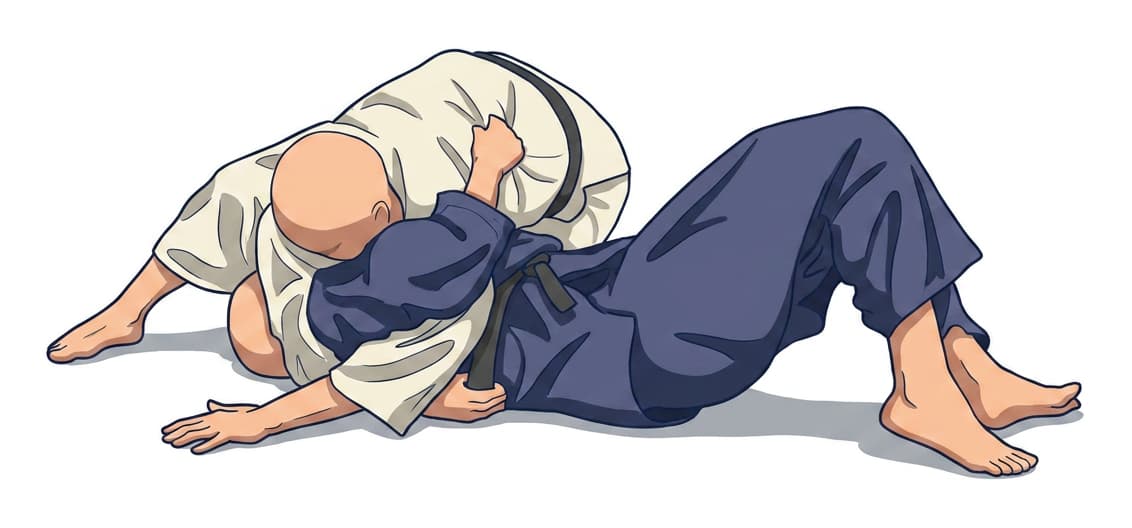
Understand the technique
is a Yoko side-control principle within . controls from the side across body, combining chest connection, upper-body control, and a stable base so uke cannot easily turn or recover a leg.
How it works
Align across the body
Settle beside uke with the chest connected across the torso and the hips low enough to stay balanced. Use upper-body control to limit the turn toward tori, while leaving room for normal breathing.
Adjust the base as uke moves
Keep the base broad and active rather than sprawling weightlessly over uke. When uke bridges, frames, or turns, adjust the hips and chest connection so the side-control principle stays stable.
Common mistakes
Unsafe pressure or an unstable sprawl
Pressure on the throat or face and uncontrolled body weight are not part of the control. Keep the weight through the torso and base, stop for a tap or , and do not use the position to block breathing.
First learning focus
First recognize the side-control alignment: chest across the torso, balanced hips, and a base that can follow movement. Maintain that shape before adding tighter upper-body control.