
Judo technique
Kata-gatame
Learn the basics of Kata-gatame and its two variants.
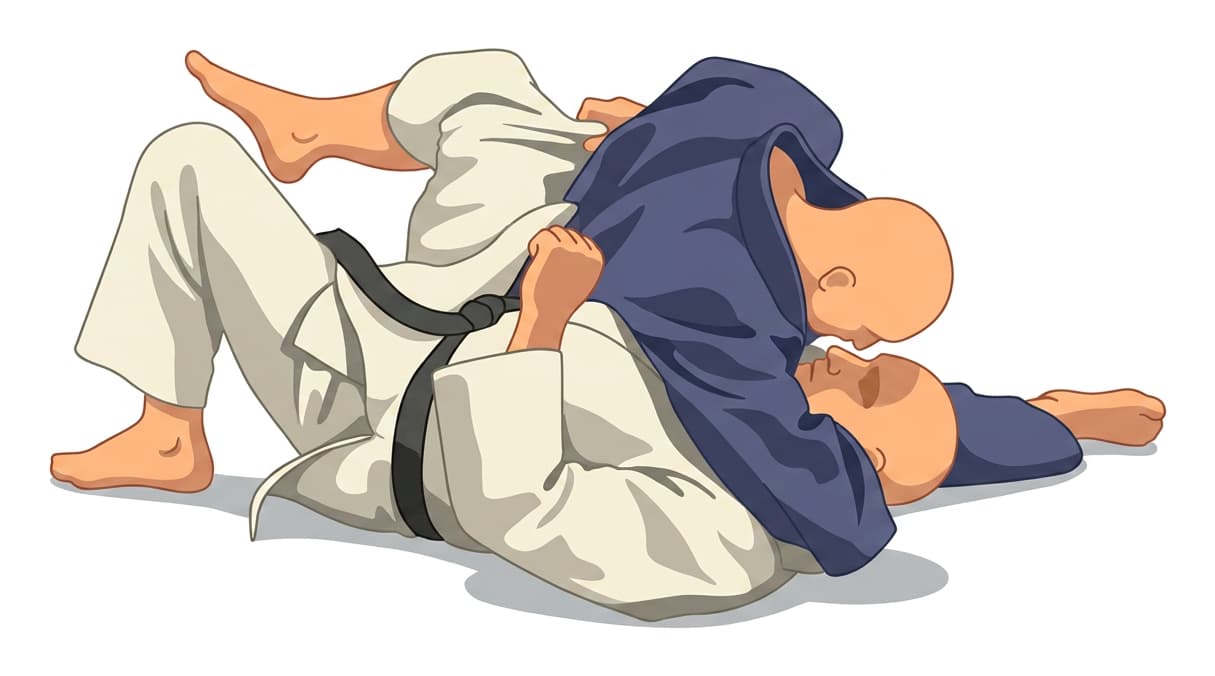
Understand the technique
is a shoulder hold within . brings own arm close to the head and closes a ring around the arm, head, and shoulder. The control comes from the closed shape and body position, not from squeezing the neck.
How it works
Build the closed arm ring
Guide uke's arm against the side of the head, reach around the arm, head, and shoulder, and join the hands to close the ring. Keep the shape connected to the body so the control is distributed rather than forced through the neck.
Choose a stable variant
In the kneeling variant, one knee is beside uke's body and the other foot provides support. In the sitting variant, tori sits beside uke in a -like position while preserving the closed ring.
Common mistakes
Forcing the neck instead of the position
Pulling on the head, restricting breathing, or trying to tighten the hold with strength ignores the arm-ring structure. Keep pressure controlled, release immediately for a tap or , and do not continue after the hold has ended.
First learning focus
First form the relaxed, closed ring and stabilize one variant with the body. The hands close the shape, but the base and torso connection make it a controlled hold-down.