
Judo technique
Kesa-gatame
Learn the basics of Kesa-gatame and how to escape from it.
Understand the technique
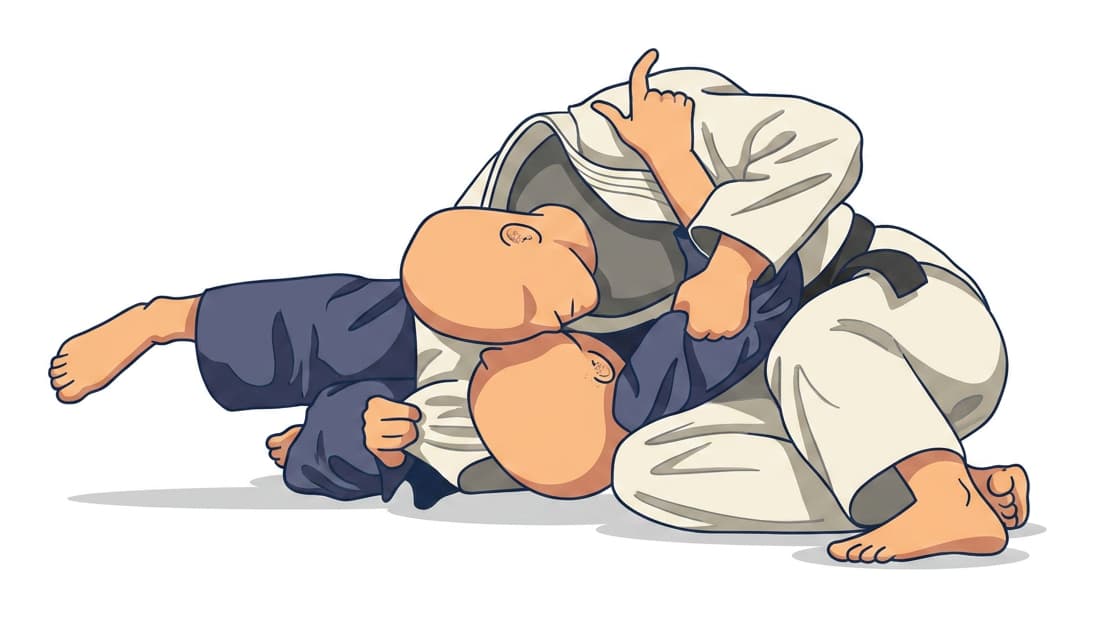
is a scarf-hold principle within . sits beside , controls the near arm and head-side area, and uses chest connection with a stable base to prevent uke from turning free.
How it works
Secure the side position
Sit close beside uke with the torso connected across the upper body. Keep the near arm controlled without twisting it, and use the head-side control to limit uke's ability to turn toward tori.
Stabilize with the body
Keep a broad, adjustable base and distribute pressure through the chest and torso rather than through the arms. Follow uke's bridge or turn with the base so the connection remains controlled.
Common mistakes
Turning control into neck pressure
Squeezing the neck, covering the face, wrenching the shoulder, or continuing after a tap or is not hold-down control. Keep breathing space, control through the body, and release immediately when the hold must stop.
First learning focus
First make the side position stable with chest connection and a comfortable breathing space. Add firmer arm and head-side control only after the base remains balanced when uke moves.