
Judo technique
Tsuri-komi-goshi
Learn the basics of Tsuri-komi-goshi and how it differs from O-goshi.
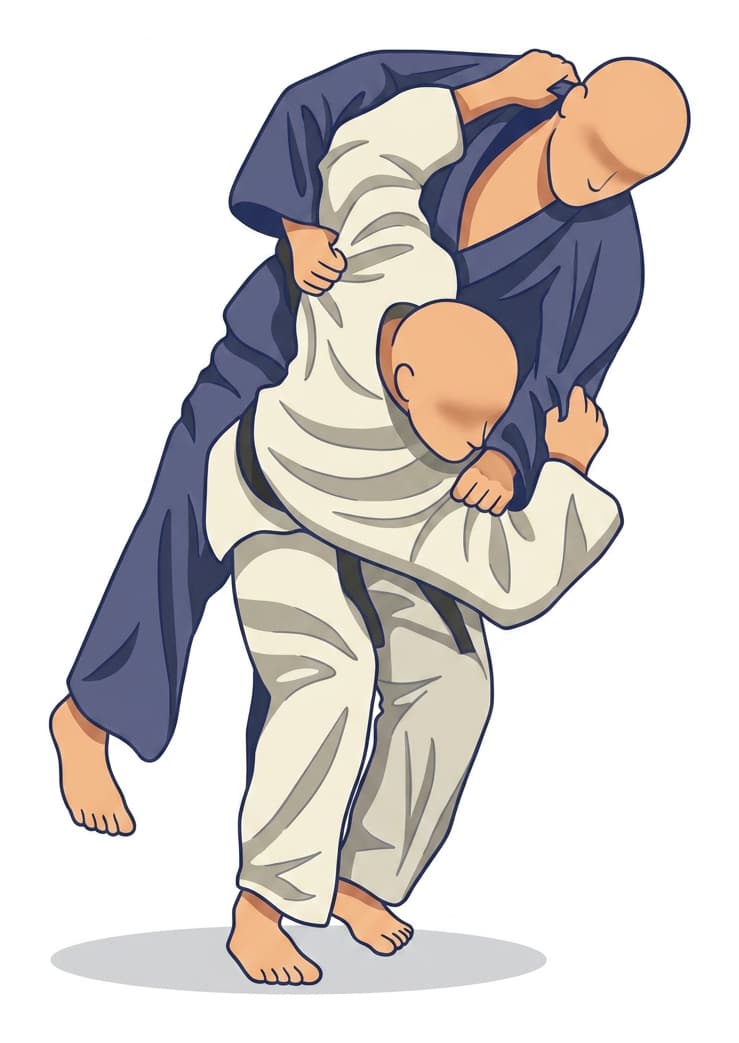
Understand the technique
is a lift-pull hip throw. Unlike , keeps the basic lapel grip rather than wrapping the hip. The lapel-side elbow comes under armpit, and a deep knee bend lets the legs lift and turn uke over the hip line.
How it works
Lift and pull from the basic grip
Create forward without changing the lapel grip. Guide the elbow under uke's armpit so the grip can lift and pull the upper body into the turning line.
Enter low, then extend
Sink into a deep knee bend with the hip close and the torso upright. Extend the legs as the body turns, so uke travels over the hip line instead of being lifted by a forward-bent back.
Common mistakes
Replacing the grip or losing the low entry
Wrapping the hip changes the defining grip distinction from O-goshi, while a shallow entry leaves the legs unable to drive the throw. Keep the lapel grip, set the elbow, and lower before extending.
First learning focus
First keep the basic grip while finding the elbow-under-armpit position and deep knee bend. The lift should come from the legs after the close entry is already in place.