
Judo technique
O-soto-otoshi
Learn the basics of O-soto-otoshi.
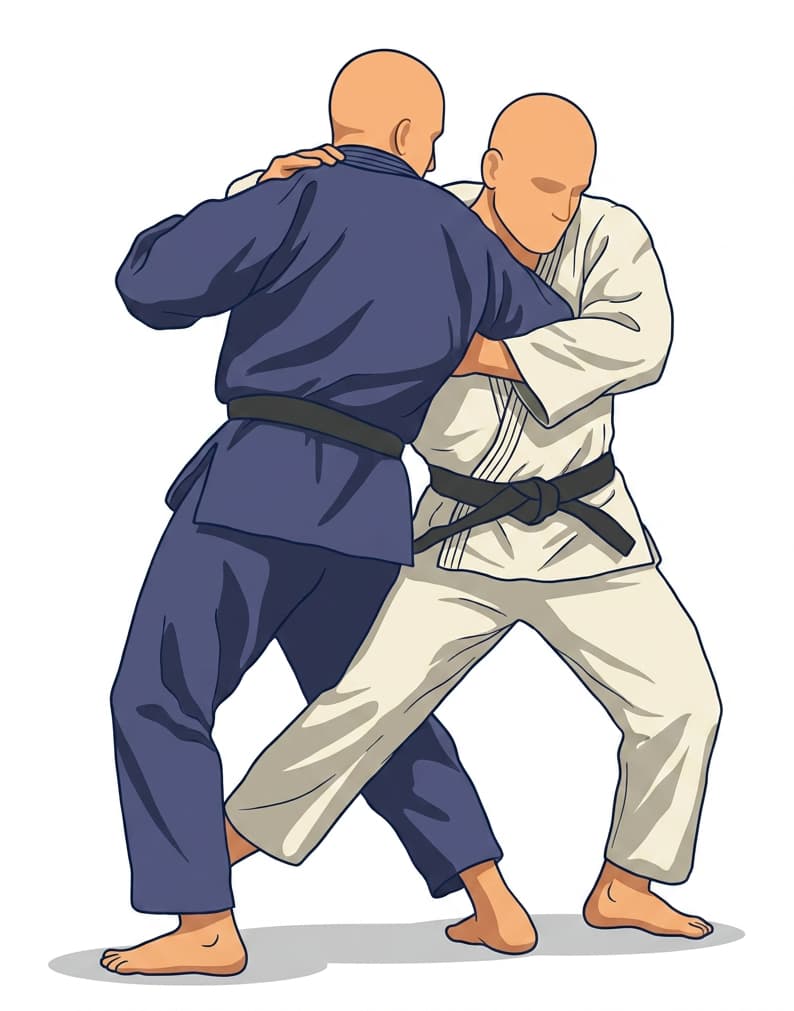
Understand the technique
O-soto-otoshi is a standing throw that sends straight backward over outside leg. The leg creates the obstacle, while balance breaking and direction create the fall. It is a drop, not a reap: tori does not swing the leg through to remove uke's leg.
How it works
Create the backward line
Before the leg matters, tori takes uke's balance backward. Uke's weight has to travel behind the base so that the planted leg becomes an obstacle in the direction of the fall, rather than something tori tries to force through.
Set a barrier, not a sweep
Place the outside leg close beside uke and keep it planted and stable. Its job is to block the backward line. If the leg swings away through uke's leg, the action has changed from the drop that defines O-soto-otoshi.
Stay close to the direction
Tori stays close enough to guide uke backward instead of leaning away. The shape is easier to recognize when uke falls straight over the barrier, not sideways or because tori has pulled them down with the arms.
Common mistakes
Reaping the leg
A large swinging leg makes the technique look like O-soto-gari. In O-soto-otoshi, the planted leg remains a barrier and the backward balance break does the decisive work.
Dropping before balance is taken
Without a backward line, uke can simply stay over the base or step away. The leg position alone is not the throw; it only matters after uke is already easier to guide backward.
First learning focus
Before trying to complete the throw, identify the difference between a planted barrier and a reaping leg. Then watch whether uke's balance moves backward before the drop begins.