
Judo technique
Koshi-guruma
Learn the basics of Koshi-guruma and how it relates to O-goshi.
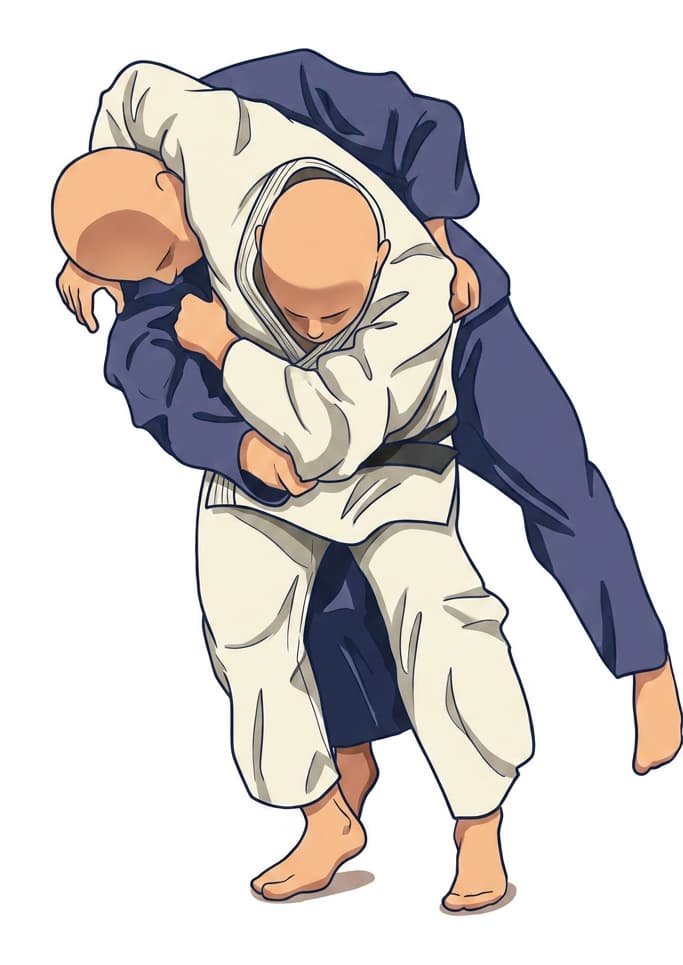
Understand the technique
is a hip-wheel throw. Like , uses the hip line, but the upper-body control turns around it like a wheel. The control guides the torso; it must not pull or twist uke's head or neck.
How it works
Connect the upper body and hip
Create forward , then turn in close enough that the hip crosses uke's front. The arm around the upper-body line keeps uke connected through the shoulder and torso, while the other grip maintains the throwing direction.
Turn uke like a wheel
Rotate with the whole body while the hips guide uke's path over the hip line. Keep the direction circular and forward; the upper-body control follows the rotation instead of becoming a separate pull on the neck.
Common mistakes
Using the head as a lever
Pulling down on the head, twisting the neck, or trying to finish with arm strength breaks the hip-wheel action. Keep the control on the torso and shoulder line, and let the close hip turn make the throw.
First learning focus
First find a close hip position and a circular whole-body turn. Notice that the upper-body connection guides uke around the hip rather than pulling the head down.