
Judo technique
Ko-soto-gari
- Pronunciation
- koh soh-toh gah-ree
- Meaning
- Small outer reap
Distinguish an outside ankle reap from an inside attack.
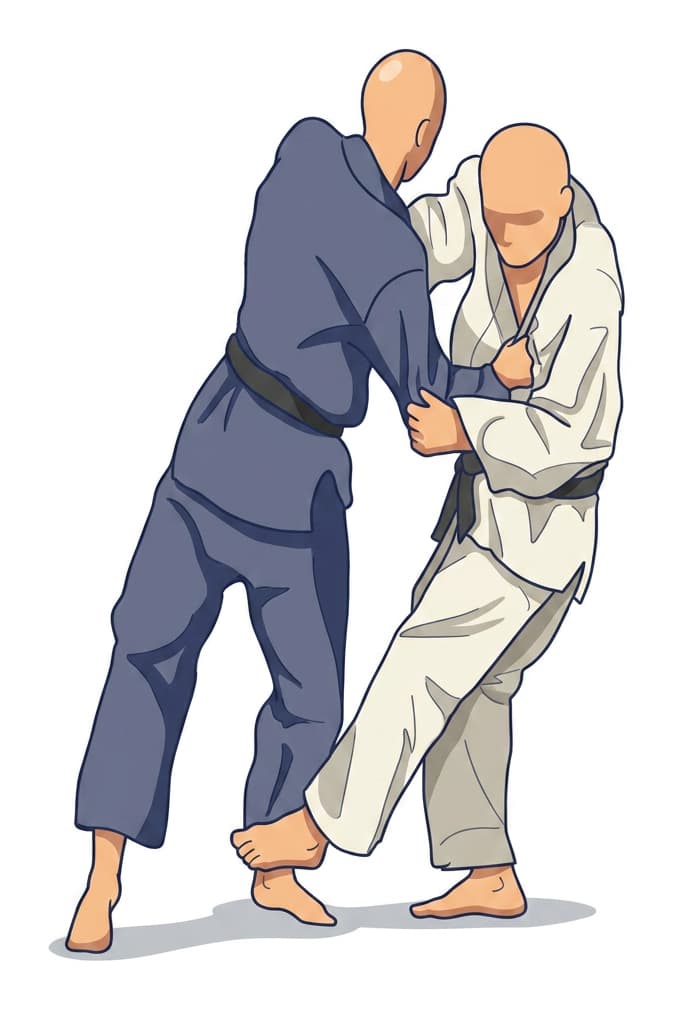
Understand the technique
is a small outer reap in . takes weight back toward a rear corner and reaps the heel from outside, removing the foot that carries that weight. Attacking from outside distinguishes it from , which reaps from inside, and the reaping action distinguishes it from , where the foot stays hooked.
How it works
Load the heel toward the rear corner
In the right-sided example, Tori moves outside Uke’s right foot and uses the grips to bring Uke’s weight back onto that heel, toward Uke’s right rear corner. A foot pinned by weight cannot step out of the way.
Reap the ankle from behind
Tori’s left sole meets the back of Uke’s right ankle and reaps it toward Uke’s toes, while the hands keep guiding Uke backward and down. Foot and hands work in opposite directions, like a pair of scissors. The other side mirrors this example.
Common mistakes
Reaping without the backward load
If Uke’s weight is still centred, Uke simply lifts the foot or steps around the reap and stays upright. Bring the weight onto the heel first.
Reaping too high
Contact at the calf or knee loses the small ankle action and can turn into a kick. Keep the sole low, at the back of the ankle.
First learning focus
First identify the two parts: Uke’s weight going back toward the rear corner, and Tori’s sole meeting the back of the ankle from outside. Add the small reap only when both happen together.