
Judo technique
Ko-soto-gake
- Pronunciation
- koh soh-toh gah-keh
- Meaning
- Small outer hook
Compare a hook that stays on with a reaping action.
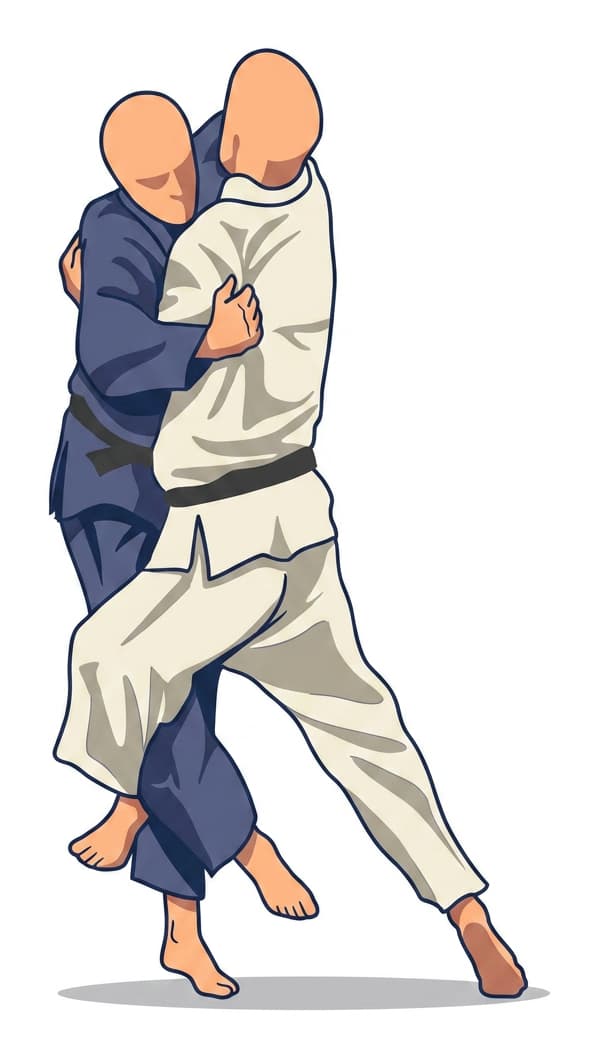
Understand the technique
is a small outer hook in . Like , it attacks the ankle from outside toward a rear corner, but foot hooks behind ankle and stays there. Uke falls backward over the trapped foot instead of having it reaped away.
How it works
Hook low from outside
In the right-sided example, Tori stays close to Uke’s right side and directs Uke toward the right rear corner. Tori’s left foot hooks low behind Uke’s right ankle, so that foot cannot step back to catch the fall.
Hold the hook, move the body
The hook stays in place while Tori’s upper body guides Uke backward over the trapped support. Nothing swings through: the throw comes from the body moving while the foot holds. The other side mirrors this example.
Common mistakes
Falling across the knee
Dropping sideways onto Uke’s leg while the hook is set puts dangerous pressure on the knee. Keep the contact low at the ankle and keep your own weight off Uke’s leg.
Turning the hook into a reap
If the foot swings through, the action becomes Ko-soto-gari. That is a valid throw, just a different one: in Ko-soto-gake, the foot keeps holding until Uke falls.
First learning focus
First follow the ankle contact all the way to the finish. If the foot stays hooked, it is Gake; if it swings away, it is Gari.