
Judo technique
Uki-otoshi
- Pronunciation
- oo-kee oh-toh-shee
- Meaning
- Floating drop
Recognize a throw done by the hands alone, with no hip or leg block.
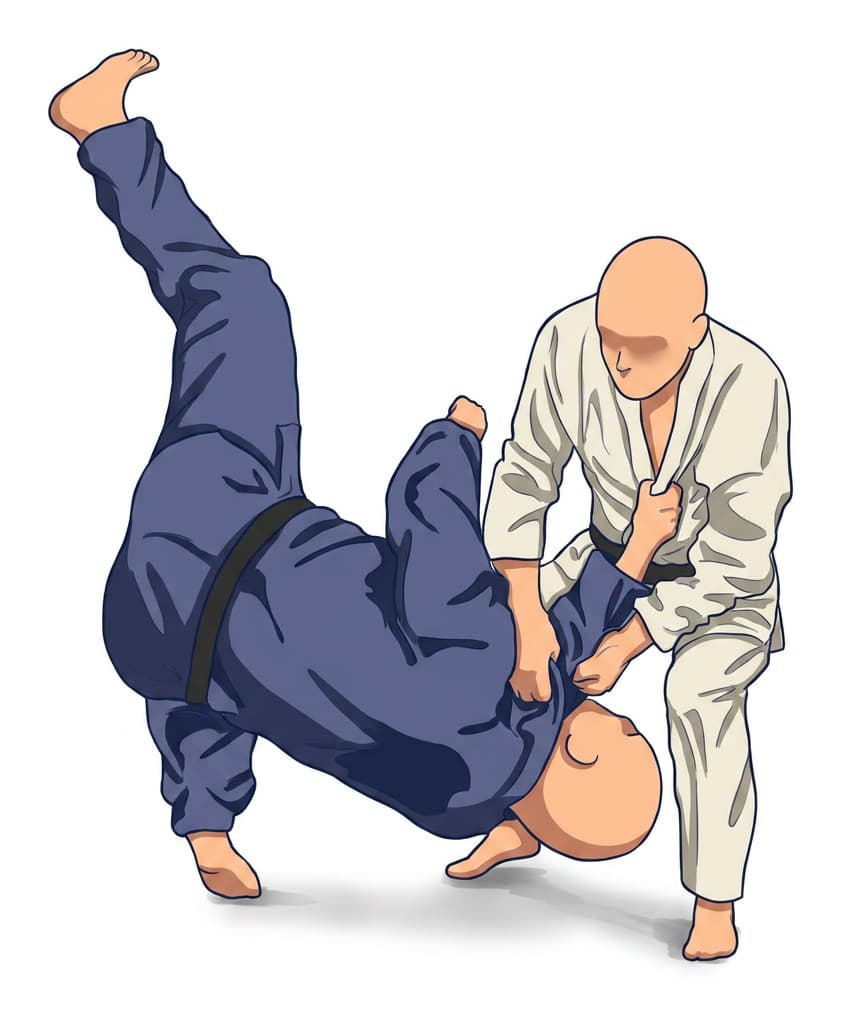
Understand the technique
is a floating drop in , the hand techniques. leads forward toward a front corner, then guides Uke down with the hands alone: no hip load and no reaping leg. It is the first throw of .
How it works
Lead toward the front corner
In the right-sided example, Tori uses the grips to lead Uke toward Uke’s right front corner, so Uke’s weight comes forward over the toes of the right foot.
Guide the fall with the hands
Tori continues the same direction and guides Uke down with the hands. In Nage-no-kata, Tori draws Uke through several steps and lowers the left knee on the final step back; standing versions keep the same hand-led idea. The illustration shows a standing finish, not the kneeling Kata form. The other side mirrors this example.
Common mistakes
Pulling down too early
Pulling down before Uke is moving forward leaves Uke standing over both feet, and the throw becomes a tug. Lead Uke forward first, then continue that movement downward.
Adding a hip or a leg
Turning the hip in or blocking with a leg changes the throw into a different technique. In Uki-otoshi, only the hands and Tori’s movement bring Uke down.
First learning focus
First watch the direction: Uke goes forward to the front corner before going down. Then compare the standing illustration with the Kata version, where Tori lowers the left knee.